


(734) 484-4710
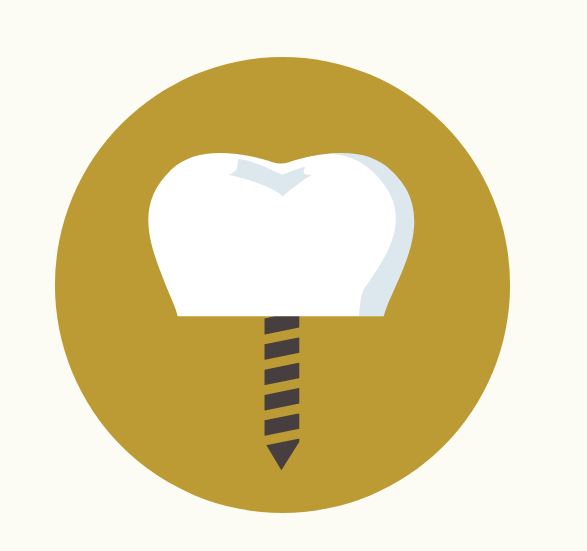
An Implant acts like a natural tooth root and is finished off with a restoration such as a dental crown to help restore the function of your teeth, look good and feel natural.
An implant is a small metal screw that replaces an entire tooth. In a brief surgical procedure, the dentist inserts an implant into the bone beneath your gums right in the spot where a tooth should be. The implant acts like a natural tooth root and is finished off with a restoration such as a dental crown to help it look and feel just like a real tooth.
Getting dental implants is a big deal. You think you might like an implant, but you aren’t sure what to expect. We explain everything here so that you can make an informed decision about your dental treatment.
Your natural teeth provide support for the height and shape of your smile, and they allow you to eat and speak comfortably.
A gap in your smile could allow your other teeth to drift out of healthy functional alignment. If that happens, your risk of developing oral health problems increases. Losing just one tooth can trigger a chain of events in your mouth that negatively impact your oral health, the appearance of your face, and your overall quality of living.
Even if you don’t experience these effects of missing teeth, there’s one problem you can’t avoid: bone resorption. This is a natural process in which your body breaks down non-essential bone tissue to use the minerals elsewhere in your body.
When you have teeth in your jawbone, they push against it and stimulate the production of new bone tissue. But once those teeth are gone, that bone tissue serves no useful purpose, so it slowly dissolves away. The result? A shortened jaw and chin that cause wrinkles and give your cheeks and lips a sunken appearance.
Having dental implants is the second best thing to having natural teeth. You can prevent or correct the issues listed above by replacing lost teeth with implants.
Losing a tooth can be devastating. A missing tooth can make us feel self-conscious about our smile and may lead to a variety of health problems. Gaps can make your bite feel uncomfortable, cause difficulties eating the food you love and may lead to bone loss or shifting teeth.
A restoration is the “false tooth” that covers the implant. The implant is not visible when you smile, but the restoration that covers it is what makes it look like you have a new tooth.
Your smile won’t be the same after you get a dental implant; it’s going to be much better.
Dental implants are easy to maintain and care for. Gently brush and floss your implant daily and protect it from injury while playing sports. Visit us periodically for checkups so that we can make sure your implant is staying healthy.
Although having a metal implant inserted into the bone of your mouth sounds painful, the procedure is far more comfortable than you might expect.
We will numb your mouth with a mild anesthetic so that you don’t feel any pain during the surgery. Advanced dental technology allows us to place implants quickly, accurately, and conservatively. This means less discomfort and downtime for you during recovery.
Some implant patients report feeling bored and even sleepy during the brief half hour it takes to place their implant. The most uncomfortable part for you may be having to hold your mouth open for a few minutes at a time, but that’s all.
It is normal to experience some swelling, discomfort, and even bruising in the next several hours after the procedure. The pain is mild and very easy to manage, however. We will give you specific instructions so that you can start minimizing the discomfort before the anesthetic wears off. Your surgical implant site should start feeling better within a week.
The actual implant placement process is much more comfortable than you might imagine.

First, you’ll have a dental implant consultation to find out if implants are right for you. Your dentist will take X-rays and a 3D cone-beam CT scan of your jaw to evaluate the bone tissue and plan your treatment. The dental team will take a scan or impression of your teeth to help them plan the angulation of your implant.
We administer an anesthetic so that the surgical site will be completely numb. The dentist creates a small hole in the gums and bone of your mouth. The dentist places the implant post in the hole. Sometimes (but not always) sutures are needed to close up the gums.

You go home to let your implant heal over the course of the next few months. You come back to the practice where we will have your dental restoration ready to go. We will place the restoration and you will leave with a brand-new and fully functional tooth.

to schedule an initial consultation & exam.
Your consultation will include an examination of everything from your teeth, gums and soft tissues to the shape and condition of your bite. Generally, we want to see how your whole mouth looks and functions. Before we plan your treatment we want to know everything about the health and aesthetic of your smile, and, most importantly, what you want to achieve so we can help you get there.
Dental Implants are a serious investment that should be considered carefully. The needs of each patient vary greatly. With so much on the line, we take your health and safety seriously and only provide the highest quality care. So how much could dental implants cost and what exactly would you be paying for?
The cost of dental implants will vary based on the extent of the treatment needed and the patient’s dental plan. We can work with you and your insurance company to help you determine the cost of implants prior to your appointment and phase treatment according to your needs.
How is the cost of dental implant surgery determined? Here are some important factors:
Every case is different, so it is important to speak with a dentist and to have an oral exam to allow us to evaluate your unique situation and provide you with different treatment options to consider. We would be happy to provide you with a more accurate quote.
Are there other solutions for missing teeth?
Gaps caused by 1 to 3 missing teeth can sometimes be repaired with a dental bridge if teeth behind and front of the gap can hold the dental bridge. A lot of missing teeth on the top or bottom or the whole mouth may be repaired with a dental prosthetic or removable dentures. When comparing the cost of dental implants to other tooth-replacement options it is important to consider the pros and cons.
Dental implants may require a steeper initial investment, but they are more secure and durable than bridges or dentures. Removable dental prosthetics require different care and maintenance and you may need to have them adjusted or replaced as you age. By contrast, you take care of your dental implant like you would take care of your natural teeth, with routine oral care at home and routine dental exams. With proper care, a dental implant can last a lifetime.
Dentures and implants are not the same thing and they function in very different ways. Dentures rest on top of your gums and press down on the underlying bone tissue. Implants strengthen your bite because they are fixed well below your gums. Both tooth replacement options have unique pros and cons. We recommend that you visit us in person to find out which treatment is best for you.
For patients who are not good candidates for dental implants, dental bridges and full or partial dentures may be the best option for replacing missing teeth. The best way to find out what solutions exist for your specific needs is to call and book an appointment. We would be happy to discuss all your options and answer any specific questions you may have.
To get an implant you must be an adult and have good general oral health. Your jawbone must be strong enough to support a new implant and other supporting tissues, like your gums, must be healthy to reduce the risk of complications. If you’re concerned that you might not be a viable candidate, give us a call to find out for sure. There are usually treatment options available to restore your oral health with the ultimate goal of getting a dental implant and there are often alternative solutions to replacing missing teeth.
Yes! Your dental implant may be topped by a crown, a bridge or implant-supported dentures that will always be custom made to make you feel comfortable. That means your custom-made teeth are shaped and coloured to match your existing teeth and bite. Patients often have difficulty distinguishing their natural teeth from their beautiful new dental implants.
The science of dental implants has evolved so rapidly from its early days that it is now a very predictable and relatively pain-free procedure. The dental implant procedure is completed with such care and precision you’ll experience as little discomfort as possible. With proper aftercare, you can expect minimal swelling and almost no bleeding. Your physical and emotional health are both important to us. If you feel anxious about visiting us for any reason, please let us know.
The success of your implants will depend greatly on how well you maintain them. They need to be professionally cleaned and examined routinely, just like your natural teeth. We usually recommend a check-up approximately every 6 months but may recommend check-ups more or less often depending on your specific requirements.
1747 E Michigan Ave, Ypsilanti, MI 48198
Mon-Wed 9 am to 5 pm
Thursday 9 am to 6 pm
Friday Doctors on Call
Sat / Sun Emergency Cases
We are committed to providing quality healthcare to families located in the Ypsilanti area and treat patients of all ages.
Hours of Operation
Mon – Wed: 9 am – 5 pm
Thursday: 9 am – 6 pm
Friday: Doctors on Call
Sat/Sun: Emergency Cases
© 2023 The Avenue Dental. All Rights are Reserved. Designed by Masood